Periodontal Series with Dr. Hom-Lay Wang, 2026
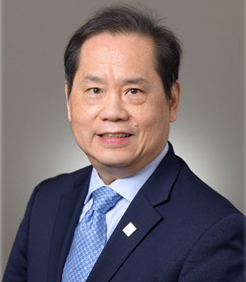
Hom-Lay Wang
DDS, MSD, Ph D.

Biography

Dr. Hom-Lay Wang is a Professor and Director of Graduate Periodontics at the University of Michigan, where he has served since 1989 and led the Graduate Periodontics program since 1995. He earned his DDS from Taipei Medical College, DDS and MSD from Case Western Reserve University, and PhD from Hiroshima University.

An internationally recognised leader in periodontology and implant dentistry, Dr. Wang has co-edited three textbooks , authored over 50 book chapters and reviews, and published more than 800 peer-reviewed scientific articles. He is a diplomate and former Chair of the American Board of Periodontology, a Fellow of the American College of Dentists, and a past President of the Academy of Osseointegration

Course Overview:

The periodontal Surgery & Soft Tissue Grafting Series with Dr. Home-Lay Wang is a comprehensive program consisting of two, three-day courses, designed to equip dentists with advanced skills in periodontal therapy and soft tissue management around natural teeth and dental implants. Each course combines in-depth didactic lectures with hands-on workshop training, providing participants with practical experience to immediately integrate into their practice.

By the end of the series, dentist will gain the knowledge, clinical skills, and confidence to integrate advanced periodontal and peri-implant procedures into their everyday practice, enhancing both functional outcomes and esthetic results.

Course Dates

Jan 16 - 18 & March 20 - 22, 2026

Venue

CEP Dental Education Centre
145 Renfrew Dr #210, Markham,
ON L3R 9R6

Course Fee

 Single Session: $3895 + HST (13%)
 Both Session: $5895 + HST (13%)

REGISTER NOW TO SAVE YOUR SPOT:
Advances in Periodontal Surgery

January 16-18, 2026

Course Overview

This course is designed to help dentists incorporate periodontal therapy into their daily practices. In addition, the participants will be exposed to different suturing techniques; flap designs, flap tension releasing and the most common used periodontal surgery procedures (including the most updated surgery techniques) to treat 2 most common found periodontal defects – infrabony and furcation defects. During this course, newest periodontal disease classification will be used to familiarize the participants with most updated information.

This course combines didactic lectures and hands-on workshop with pig jaws to cover a broad range of advanced flap designs, suturing techniques as well as periodontal surgical techniques such as gingivectomy, distal wedge, Modified Widman’s flap, guided tissue regeneration, bone grafts and apically positioned flap with or without osseous recontouring. In this module, the participants will gain a good understanding of various bone grafts as well as barrier membranes that are currently available in the market

Learning Objectives :

After completing this three-day continuing education course, participants will be able to:

  • Discuss 2018 new periodontal disease classification
  • Explain the causes, symptoms, and biology of periodontal diseases
  • Familiarize periodontal instrumentation
  • Know current available adjunctive Procedures (such as Laser assisted periodontal therapy and effect of antibiotic therapy both systemic and locally delivery
  • Know how, when, and why a periodontal surgery is needed.
  • Understand different flap designs and suturing techniques including advanced flap designs
  • Know how to provide pre- and post-surgical instruction after surgery
  • Learn how to properly manage infrabony defects
  • Learn how to properly manage furcation defects
  • Know when and how to perform guided tissue regeneration
  • Know the differences among all available bone grafts (auto-, allo-, xeno-graft, and alloplast) and different types of barrier membranes.
Achieving Predictable Soft Tissue Management Around Natural Teeth and Dental Implants

January 16-18, 2026

Course Overview

The goal of this three-day hands-on workshop is to equip dentists with the skills to incorporate a range of soft tissue grafting techniques into their daily practice for addressing soft tissue deformities and esthetic complications around natural teeth and dental implants. Participants will explore and practice various techniques, including the coronally advanced flap, tunneling approach, and combination approaches, which will be thoroughly discussed and demonstrated.
The workshop will delve into the concept of periodontal and peri-implant phenotypes, providing guidance and treatment recommendations for successful soft tissue grafting around natural teeth and dental implants. Participants will gain a comprehensive understanding of how to use a decision tree to select appropriate materials and techniques for each case.

While implant integration has become increasingly predictable, achieving esthetically pleasing outcomes remains a significant challenge. This course introduces concepts such as the "esthetic triangle" and the "implant esthetic index," which address critical factors like papilla creation, adequate bone support, six-dimensional considerations, and soft and hard tissue grafting. These principles form the foundation for achieving optimal peri-implant phenotypes and esthetic restorations. This hands-on workshop emphasizes the essential factors for performing soft tissue grafts around natural teeth and achieving esthetic implant restorations during or after implant surgery.

Learning Objectives :

After completing this three-day continuing education course, participants will be able to:

  • Understand the concept of periodontal and peri-implant phenotype and its relevance to health and esthetic outcomes with dental implants.
  • Recognize the indications and techniques for various soft tissue grafts (e.g., free soft tissue grafts, subepithelial connective tissue grafts, acellular dermal matrices, and guided tissue regeneration-based root coverage).
  • Use a decision tree to select appropriate soft tissue grafting techniques.
  • Perform soft tissue grafting techniques, including both soft and hard tissue approaches, for esthetic outcomes.
  • Master tunneling soft tissue graft techniques and differentiate between approaches such as crestal tunnel, semilunar, lateral tunnel, apical tunnel, and combination techniques (e.g., tCAF).
  • Augment or recreate an adequate band of keratinized and attached mucosa around dental implants.
REGISTER NOW TO SAVE YOUR SPOT:

Thank you to our Diamond Sponsor